The Supreme Court recently decided to take up a case challenging the constitutionality of Colorado’s ban on “conversion therapy.”
According to The Trevor Project, conversion therapy is a term “used to encompass a wide range of efforts to change a person’s sexual orientation or gender identity.” For example, these practices might attempt to change a young person from being gay to being straight, or to no longer identify as transgender. Research has found that young people who reported undergoing conversion therapy were more than twice as likely to report having attempted suicide in the previous year.
Leading medical and mental health organizations have discredited the practice. As a result, 23 states and Washington, D.C., have passed laws banning conversion therapy among minors. A new Data for Progress survey examined voters’ perceptions of these bans.
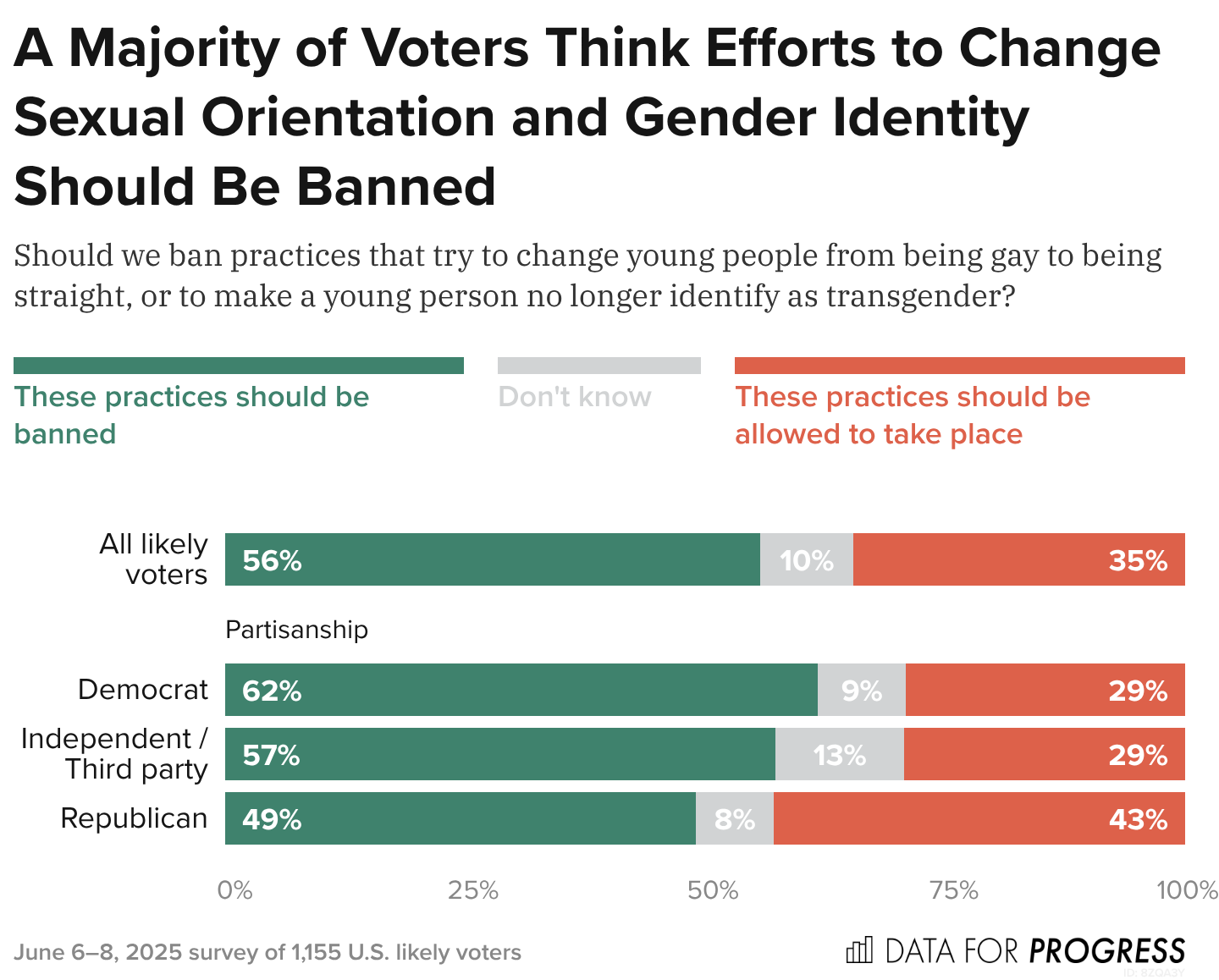
First, when voters are asked broadly about efforts to change a young person’s sexual orientation or gender identity, a majority (56%), including 62% of Democrats, 57% of Independents, and nearly half (49%) of Republicans, say “these practices should be banned,” while 35% say “these practices should be allowed to take place.”
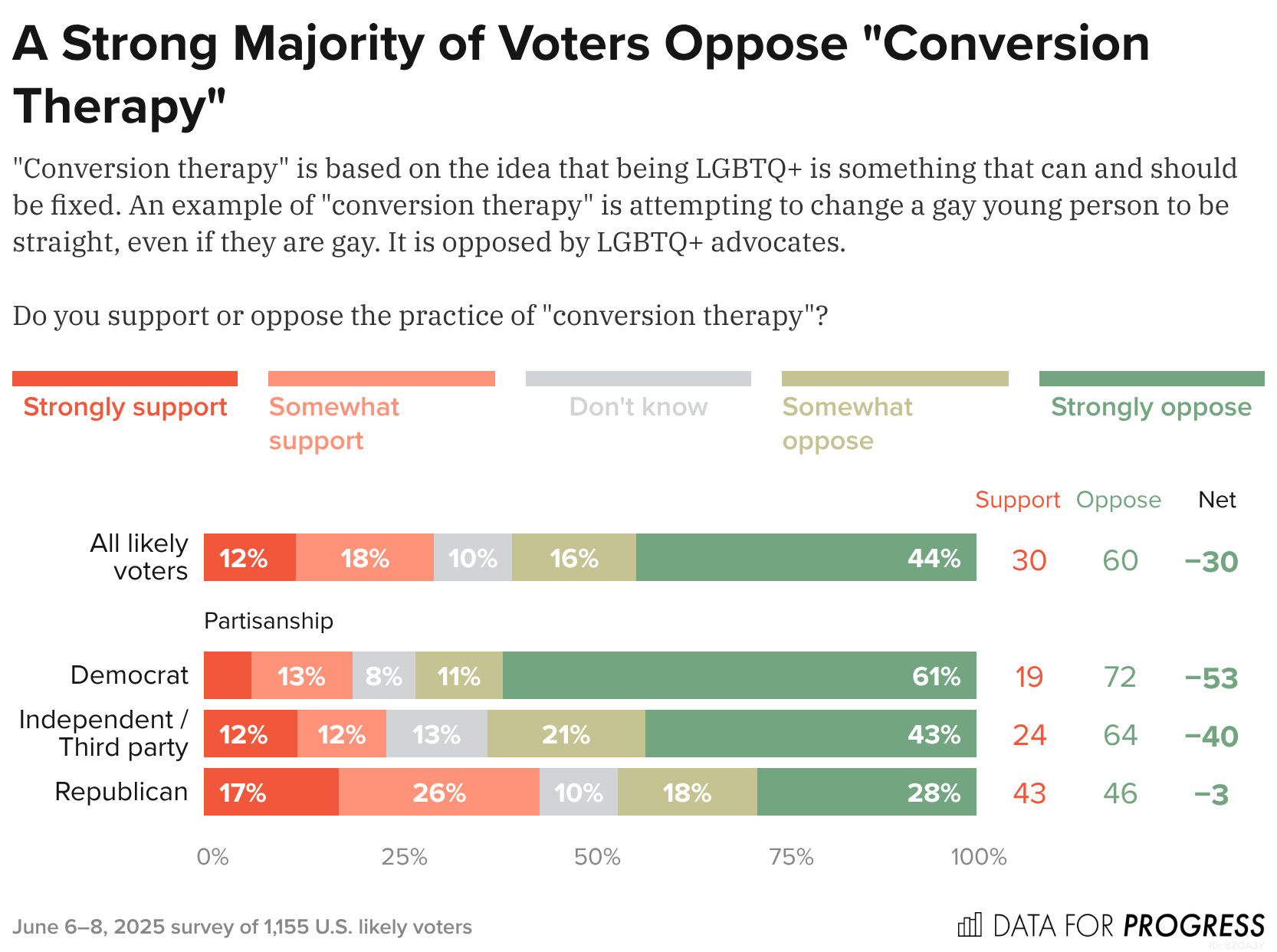
After being informed of the term “conversion therapy” and provided with a description, including the fact that it is opposed by LGBTQ+ advocates, a strong majority of voters (60%) say they are opposed to the practice.
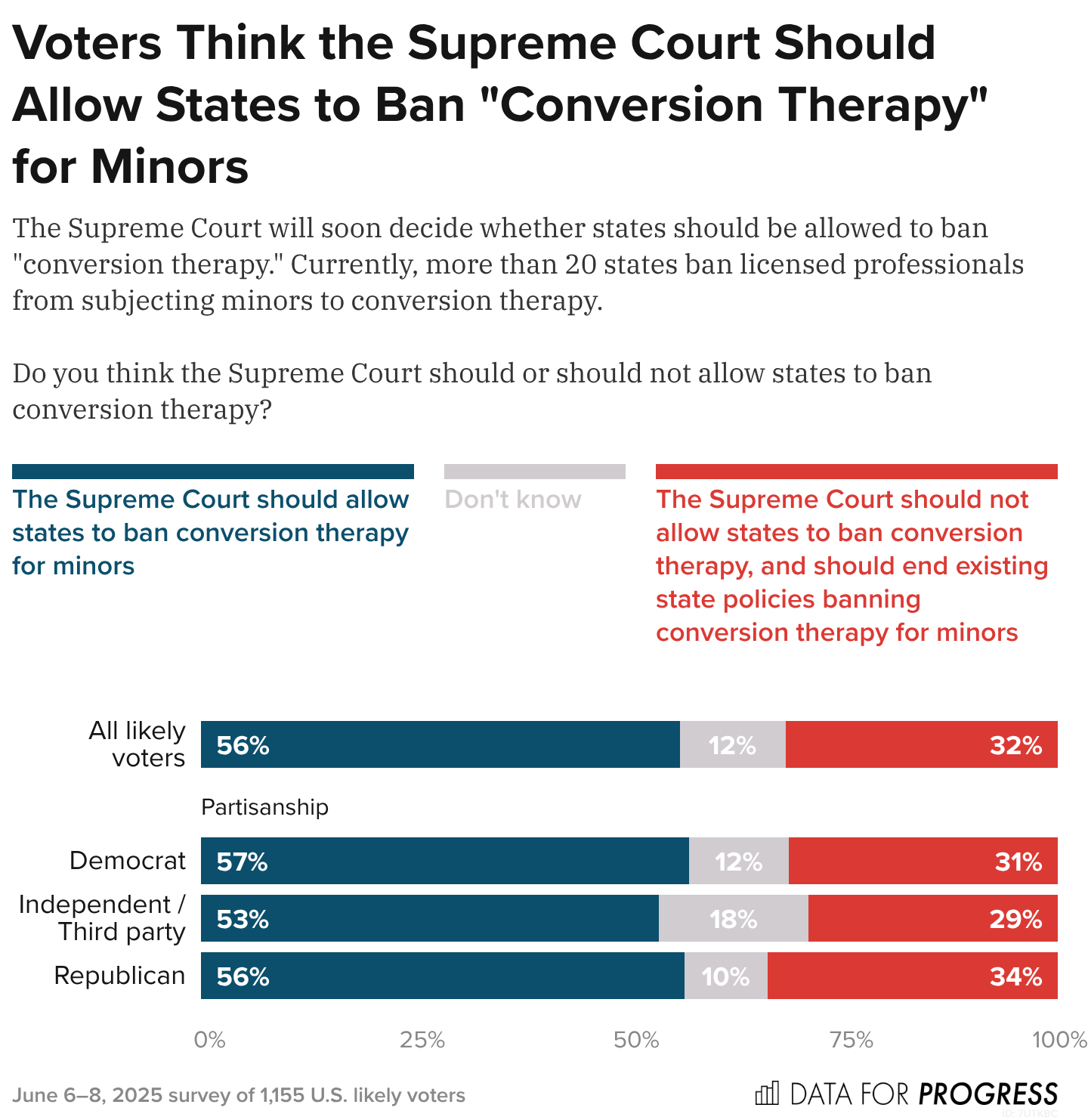
Lastly, after being informed that “more than 20 states ban licensed professionals from subjecting minors to conversion therapy” and that the Supreme Court will soon decide whether these states should be allowed to implement these bans, a majority of voters (56%) say the Supreme Court should allow states to ban the practice, including majorities across party lines. Less than 1 in 3 voters (32%) say the Supreme Court should not allow states to implement conversion therapy bans, and should end existing bans.
Conversion therapy is a complex issue to understand, but these findings demonstrate that a majority of voters are largely opposed to the practice, including pluralities of Republicans.
Survey Methodology
From June 6 to 8, 2025, Data for Progress conducted a survey of 1,155 U.S. likely voters nationally using web panel respondents. The sample was weighted to be representative of likely voters by age, gender, education, race, geography, and recalled presidential vote. The survey was conducted in English. The margin of error associated with the sample size is ±3 percentage points. Results for subgroups of the sample are subject to increased margins of error. Partisanship reflected in tabulations is based on self-identified party affiliation, not partisan registration. For more information please visit dataforprogress.org/our-methodology.