As extreme weather events escalate in both intensity and cost, property owners are feeling the burden. Homeowners and renters insurance prices have increased year over year for policyholders nationwide, with hazard policies like wildfire and flood insurance facing similar price hikes. The wildfires in Southern California earlier this year echo these patterns and provide a sobering look at the future, as insurance providers in the state announced they are seeking approval for further price hikes and deciding to cancel or no longer renew policies in areas with particularly high risk.** **
Building on past national research, Data for Progress and the Insurance Fairness Project surveyed 1,203 likely voters to understand their awareness and views of the national insurance crisis, as well as their attitudes about how to resolve current challenges in the industry, like home insurance rates rising and providers exiting some state insurance markets.
On the subject of property insurance, 71% of voters say they have read or heard at least a little (50% have heard “a little,” while 21% have heard “a lot”) about recent changes impacting the property insurance industry in the U.S. A strong majority of voters are also concerned about future increases in the price of property insurance, with 78% of voters saying they are somewhat or very concerned. Concerns are consistent across partisanship, and are higher among voters who report personally being impacted or knowing someone personally impacted by extreme weather (85%).

When asked what forces they believe are driving these changes, voters place the most blame on insurance executives, with 85% of respondents saying they are at least somewhat responsible. Furthermore, nearly half of voters rate these executives as being “very responsible” for recent spikes in insurance rates (46%). However, voters also assign some responsibility to extreme weather due to climate change (37%) as well as to inflationary pressures facing the economy (36%). This suggests that voters understand there are multiple factors at play behind price hikes, and that profiteering by insurance executives may be driving some of it.

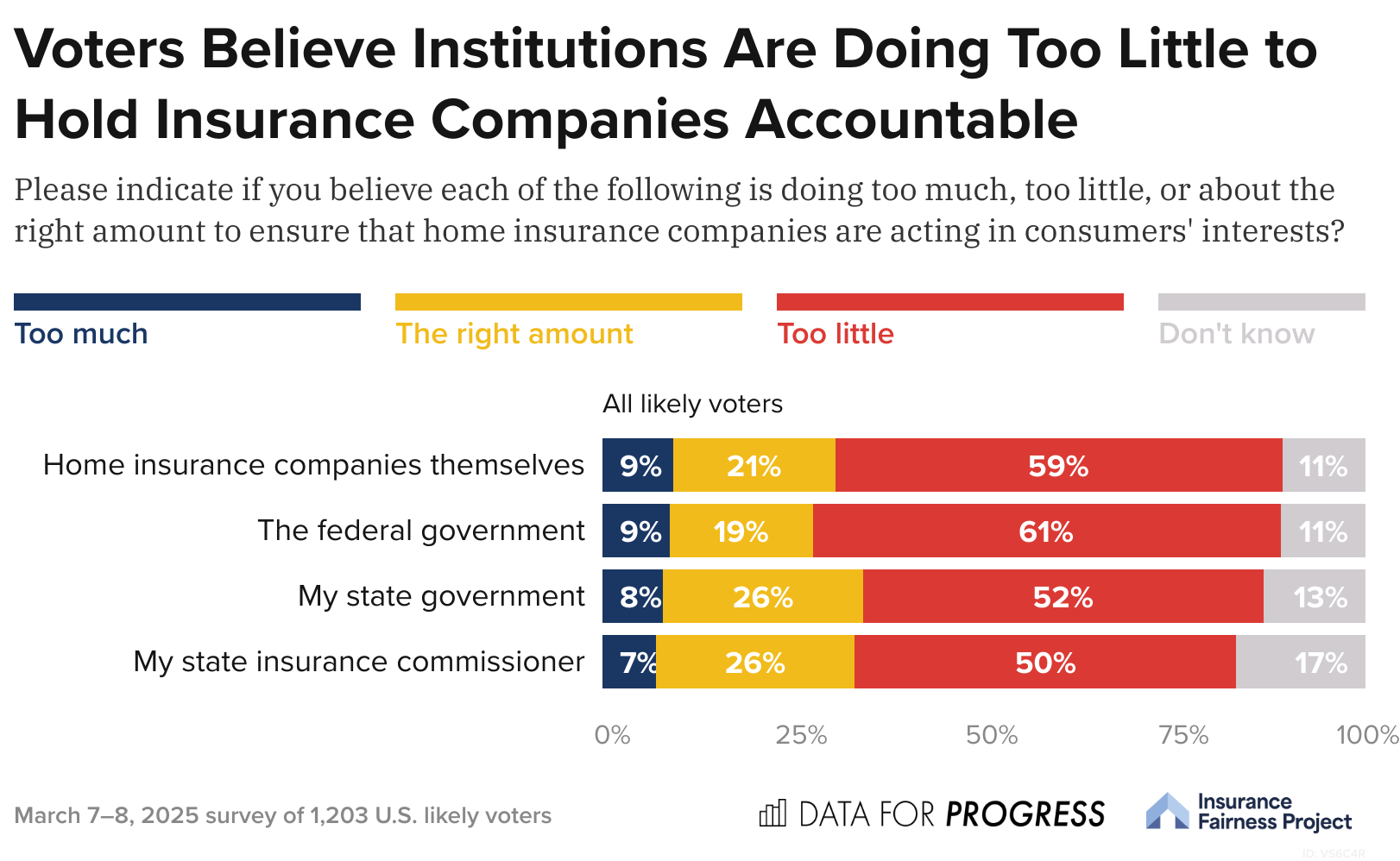
To this end, voters want to see their government step in to keep insurance prices fair and hold these companies to account. Sixty-one percent of voters feel that the federal government is doing too little to ensure that home insurance companies are acting in their customers’ interests, while 52% and 50% of voters believe that their state government and their state insurance commissioner, respectively, are doing too little to hold these companies accountable.
Beyond profiteering by insurance executives, responses reflect that voters are both aware and concerned about climate risk and how it may affect their insurance premiums. Nearly 2 in 5 voters believe that the state they live in is at higher risk of experiencing extreme weather events, including hurricanes, storms, wildfires, or floods. In another signal that voters are feeling the impacts of climate change, more than half of voters (53%) say they have either personally been impacted by extreme weather events or know someone who has been personally impacted.
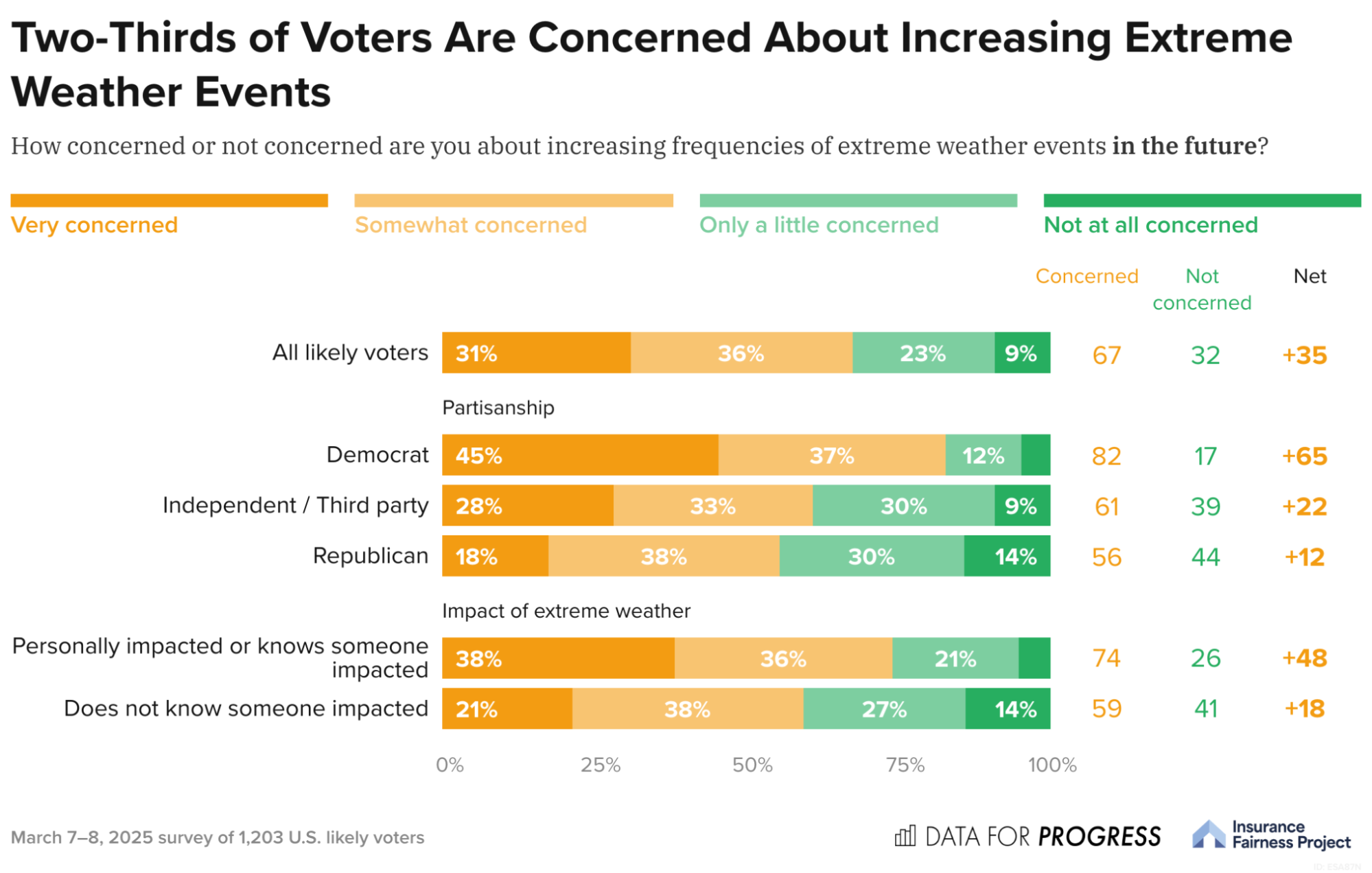
Two-thirds of voters (67%) say that they are somewhat or very concerned about the increasing frequency of extreme weather events in the future. This includes 74% of voters who have either been personally impacted by extreme weather in the past or who know someone else who has been directly affected.
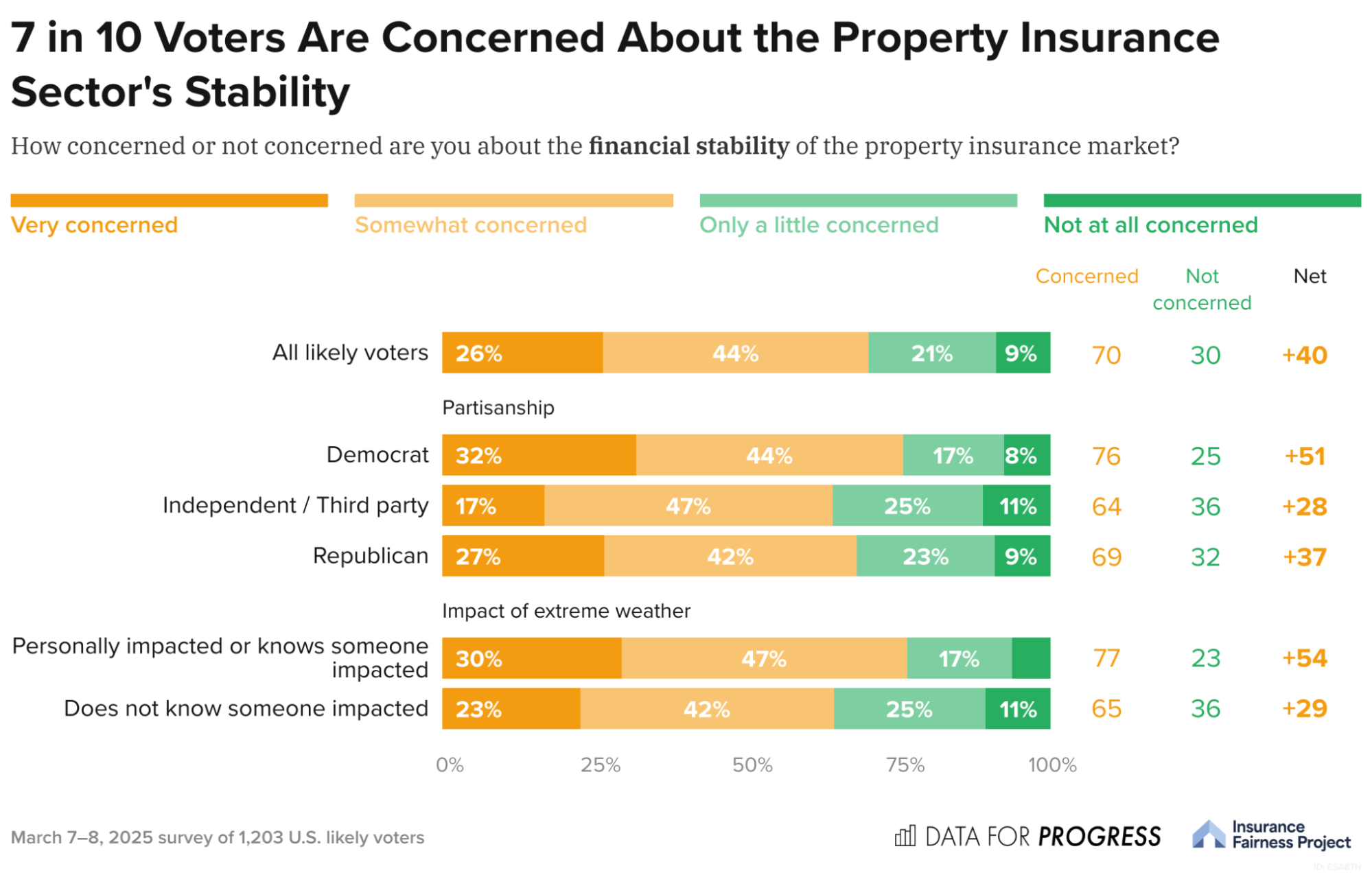
In line with their awareness of changes in the property insurance sector and concerns about the increasing frequency of extreme weather events, voters also report heightened concerns about the stability of the property insurance market overall. Seventy percent of all likely voters report being “somewhat concerned” or “very concerned” about the market’s financial stability. Not only is this true across party lines, but also, voters are concerned regardless of their personal level of experience with extreme weather events, with 77% of those who know someone impacted and 65% of those who do not saying they are concerned.
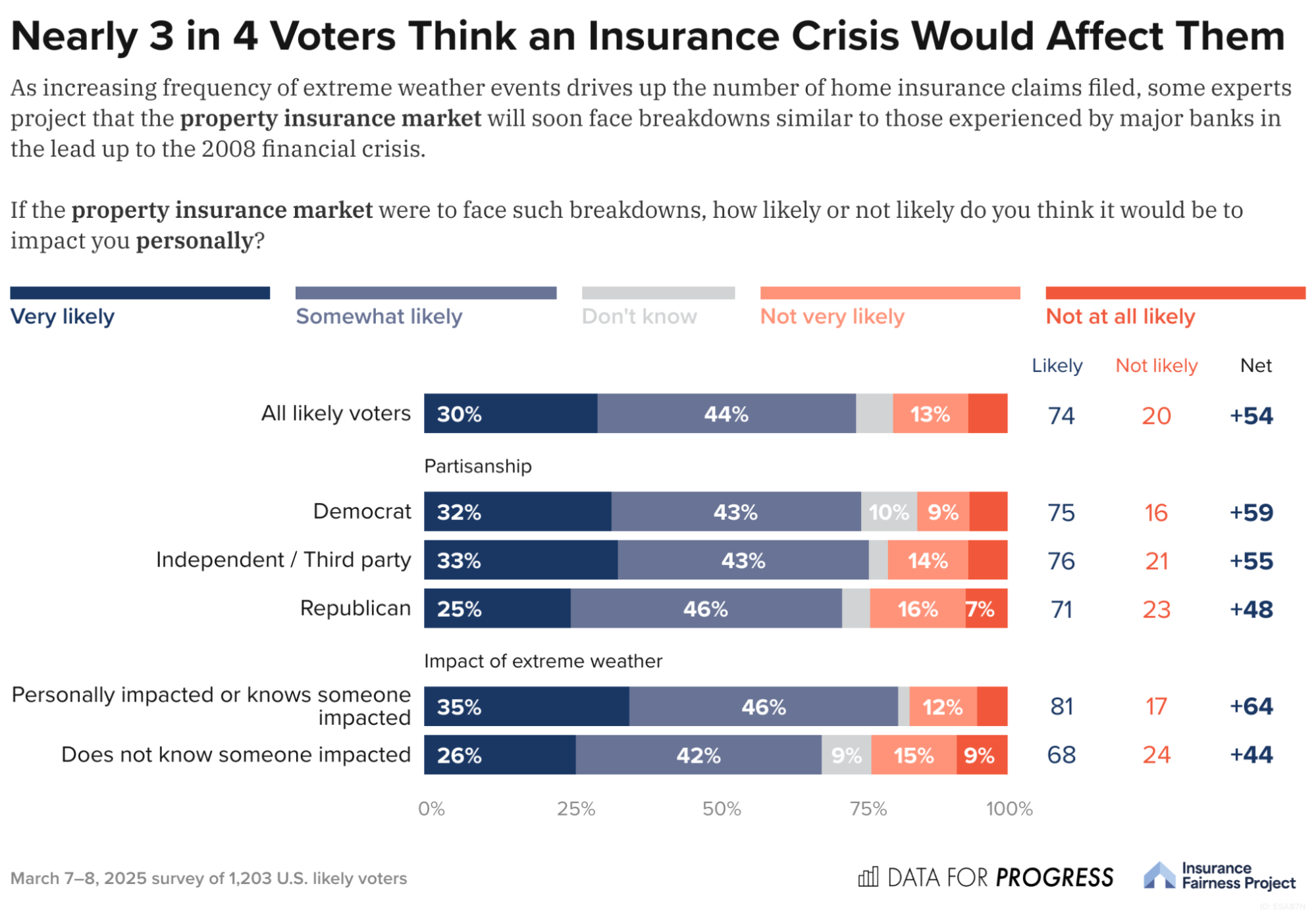
Relatedly, these voters know that the states at higher risk of extreme weather aren’t the only ones likely to be harmed by a property insurance crisis. In fact, nearly three-quarters of respondents (74%) say that it is “very likely” or “somewhat likely” that a breakdown in the property insurance market would affect them personally. Once again, these results remain consistent across party lines and regardless of whether voters have been personally impacted by extreme weather events in the past, with 68% of * unaffected * respondents believing that the crisis is likely to impact them.
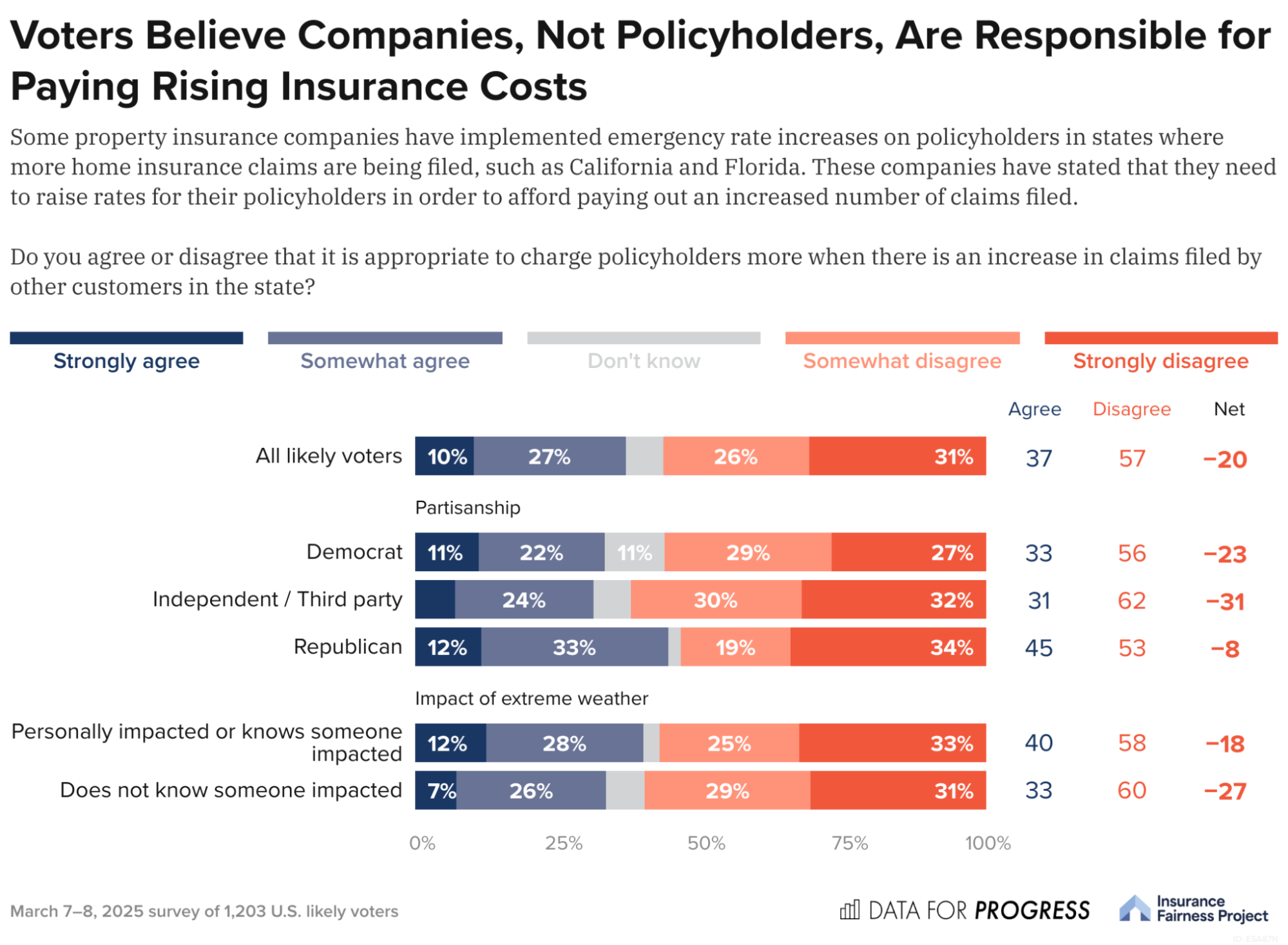
Finally, voters don’t believe that insurance companies should be able to skirt their responsibilities and pass costs onto consumers. Respondents read a passage describing recent changes in the property insurance market, including how some insurance companies have implemented emergency rate increases in states like California and Florida that have recently faced increased claim filings. They were then asked whether they agree or disagree with the claim that it is appropriate for insurance companies “to charge policyholders more when there is an increase in claims filed by other customers in the state.” Only 37% of voters agree that this is appropriate, while 57% of voters disagree. This sentiment holds across party lines, with 56% of Democrats, 62% of Independents, and 53% of Republicans disagreeing.
This polling reflects that while voters nationwide are aware and concerned about the growing challenges that the property insurance industry faces, they feel that the institutions that could offer solutions to this crisis aren’t going far enough to ensure home insurance companies are acting in consumers’ interests. If the insurance industry faces a major financial breakdown, voters think it is likely that they will be responsible for bearing the costs. Amid increasing risks of extreme weather, voters support the government taking more action to protect their property and paychecks.
Brian Burton (@Brian_C_Burton) is a lead analyst at Data for Progress.
Grace Adcox (@GraceAdcox) is the senior climate strategist at Data for Progress.